Leaded Lights & Historic Houses
Once lead is exposed to
the elements it starts ‘taking on’ it’s environment and
reacting to what’s in it. The surface of the lead
interacts with oxygen and water in the air. The change
of state only happens on the surface of the lead.
Firstly, lead oxide is produced and the surface turns to
a matt. Water in the atmosphere will spot the lead and
may produce a white powder, this is ‘basic lead
carbonate’. This can run down onto the glass but can be
wiped off without staining. (the Science bit) Basic lead
carbonate turns to ‘normal lead sulphite’ then ‘normal
lead sulphate’. This is when you get to the grey patina
state, familiar on old churches and Victorian terrace
houses where the glass such an age.
The patina on the lead protects the lead underneath. Think about a lead unit that was made up 150 years ago, the lead looks pretty much the same as the lead on an 85 year old 1930s leaded light because the state of the lead hasn’t changed for decades, the main body of the lead is protected now and will be unaffected.
This is why leaded
windows cannot be entrusted to just anyone as when the
surface is scrubbed shiny it will leak as the protective
layer has gone
To clean windows on
historic houses, you have to use gentle, non-abrasive
techniques especially purified water, soft cloths,
and minimal pH-neutral, non-scratch detergents to avoid
damaging delicate glass and frames. Avoiding harsh
chemicals and high-pressure washing, which can cause
permanent damage. Gentle methods, such as using a
soft-bristle brush with purified water and carefully
drying with a soft cloth or squeegee, preserve the
integrity of the historic windows
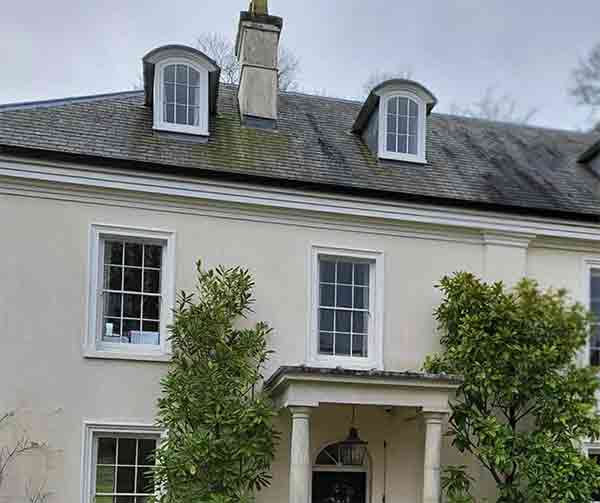
Gutters build up layers of
leaves, moss and lichens cleaned incorrectly they simply move
the
blockage to the downpipe see
bottom pic